


FLASH NEWS
The most dangerous part, the "Artemis II" mission will land at 00:30 in the morning on Earth

2026-04-10 19:29:21 / BOTA
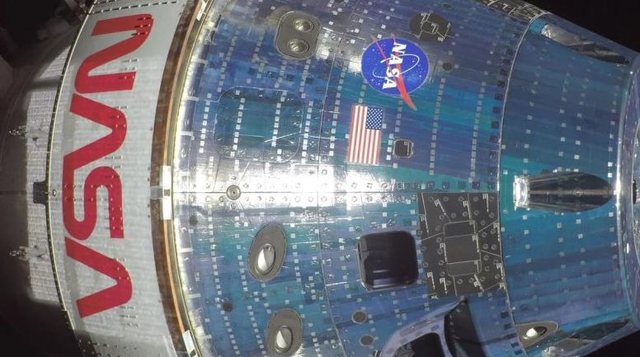
At 00:30 in the morning (European time, April 11), humanity will follow live from space the return to Earth of the Artemis II mission, after exploration around the Moon.
The crew of the Orion capsule is now in the final stages of their return from the journey that took them further from Earth than any other human crew in history since the Apollo era.
The mission, which is the first manned flight of NASA's Artemis program in more than 50 years, completed an impressive lunar orbit with the Orion capsule, confirming in practice that returning to the Moon is no longer a theory, but an operational reality.
The most dangerous part of Artemis II's 10-day mission is the moment when the capsule will enter the atmosphere and be exposed to temperatures reaching about half the temperature of the Sun's surface, that is, 2,750–3,000° degrees Celsius (5,000–5,400° Fahrenheit)!
The crew's survival through this "hell" will depend on Orion's heat shield, as the spacecraft will enter the atmosphere at a speed of approximately 40,000 km/h.
During the reentry phase, the first 4 minutes are considered critical and painful in any space mission, not only because of the extreme temperatures, but also because the spacecraft is surrounded by a cloud of superheated ionized air (plasma), which completely blocks radio waves.
This results in a communications "blackout", during which NASA's control center does not receive data and cannot send commands to the spacecraft.
In missions such as the Apollo program, this window of silence lasted about 3 minutes, while in other cases it has reached 4 minutes or more, depending on the angle of entry and flight conditions.
During this time, the spacecraft relies solely on its autonomous guidance and navigation systems, with no possibility of intervention from Earth. If something goes wrong at that moment (as the past has dramatically shown us), there is no way to immediately correct it, and the outcome of the reentry is decided within those few “blind” minutes.
The mission's heat shield design doesn't have a perfect history.
In 2022, the shield of the unmanned Artemis I spacecraft showed over 100 cracks and scratches, with places where the material "unexpectedly detached."
"The unexpected behavior of the material creates the risk that the heat shield will not adequately protect the capsule's systems and crew from the extreme heat of reentry on future missions," said a NASA assessment of the Artemis I heat shield in 2024, according to SpaceNews.
NASA later determined that the problem was caused by the heat shield material (known as Avcoat) being applied too thickly, which prevented the escape of hot gases created during the breakdown, leading to cracks and separation of the layers.
The manufacturer of the Orion capsule, Lockheed Martin, made adjustments to the way Avcoat was applied, and NASA finally gave the "green light" for the Artemis II flight.
Happening now...















Denouncing Berishism is a prerequisite for denouncing the government
Nga Blendi Kajsiu
ideas



top



Alfa recipes



TRENDING 




services
- POLICE129
- STREET POLICE126
- AMBULANCE112
- FIREFIGHTER128