


FLASH NEWS
Arsenic in bread! Doctor Alimehmeti: Toxic substance, responsible for cancer and other diseases

2026-02-04 23:37:13 / AKTUALITET
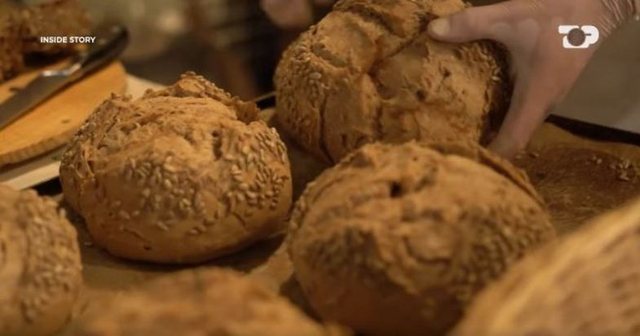
Now, we will focus on what may be the most worrying problem identified. Inside Story also conducted analyses to determine heavy metals, which are considered toxic and quite harmful to the body.
In the other analysis sheet, what stands out is the level of inorganic arsenic, which results in 0.266 milligrams per kilogram. If we take into account the fact that the weight of the bread is only 800 grams, then this means that the level could be even higher. As is known, inorganic arsenic is a toxic substance that is quite dangerous if found at high levels. But what further complicates the situation is the fact that the official guidelines and manuals in force have not set a norm above the allowed level in bread. On this point, experts remain divided. Doctors sound the alarm and consider this result found in the analysis of 0.266 milligrams of arsenic problematic. Meanwhile, for chemists, the situation cannot be defined as so dramatic…
"Be careful, because arsenic does not have the same recommended dose for all diseases, so I took the smallest and this is to identify all types of diseases, but for skin lesions, skin cancer and so on, this dose is 0.3, for some others it increases, when it comes to causing lung cancer, heart problems, infertility...", said Ilir Alimehmeti, a doctor.
"In scientific principles, a comparative reference cannot be made with rice since bread has mass consumption and especially in our country it is the main product of mass use among the population of all ages and consequently it should have its own scientific standards that we unfortunately do not have ," said Besnik Jakaj, a doctor.
"In the medical concept, we will look at the exposure we have to arsenic, so what kind of arsenic a person takes in and let's not forget that there are two types of arsenic, organic and inorganic. Inorganic arsenic is the harmful one," said doctor Ilir Alimehmeti.
"We are talking here about the total arsenic level, while in the literature and in the legislation it is inorganic arsenic which is toxic ," said doctor Ilir Pecnikaj.
In Instruction 4 dated 9.2.2024 "On the establishment of maximum levels for certain contaminants in foods", in the relevant table of limits for "Cereals and cereal-based products" there is no level defined for bread.
For some experts, this is an indication that arsenic cannot and should not be present in bread. This is also supported by the fact that the AKU, in its laboratories, has no determination for the level of arsenic in bread.
"In the first analyses we see that arsenic is high, compared to the European Community regulations for cereals, but only rice is cited, if we make the comparison we are outside the maximum limit, we have bread every day and consumption is daily. This is necessarily an alert, but this is an alert for the NFA which must necessarily follow the development in this direction of heavy metals", said the doctor, Ilir Alimehmeti.
Found in a situation without precise definitions, we have addressed the NFA with another request for information on whether it conducts analyses for heavy metals in bread, and what are the levels it takes as a basis in the case of arsenic, but we did not receive a response until the broadcast of the documentary.
"It needs a lot of attention from regulatory agencies. It happened in Albania that the NFA did not have any values set for the maximum allowed value and instead set them at the moment when problems arose," said the doctor, Ilir Alimehmeti.
At this point, it is clear that we face a huge vacuum that needs to be addressed by lawmakers. From informal communications with experts at line institutions, we were informed that conducting such analyses for metals in bread is rare, if not non-existent. Despite the contradictions among experts, doctors insist that in any case, the presence of arsenic is dangerous and has health consequences.
"The doses accepted by the European Food Safety Authority have decreased in the last two years because they were higher until 2023, but realizing that this is an increasingly serious problem, they have reduced the doses from 0.6, which you told me is in milligrams, to 8 micrograms per kg of body weight," said doctor Ilir Alimehmeti.
"On the other hand, if we take the maximum that weight says is 8 micrograms per kg of weight, then a 20 kg child can tolerate up to 160 micrograms of daily dose. Be careful, we are not exposed to arsenic only through bread but also through other foods, there is rice, there is water, there are fruit juices, and the body perceives total arsenic with not only a specific source ," said the doctor, Ilir Alimehmeti./ Inside Story
Happening now...














ideas

Where are we going?
Nga Sidi Hasanaj

They did not hinder Basha, but the political rotation
Nga Ermal Peçi
Hasimja kërkon të
Nga Neritan Vladi
top


Alfa recipes

TRENDING 




services
- POLICE129
- STREET POLICE126
- AMBULANCE112
- FIREFIGHTER128