


FLASH NEWS
Kalmli in danger, thirst for concrete threatens Durrës' last untouched coast

2026-04-12 11:55:51 / EKONOMI&SOCIALE
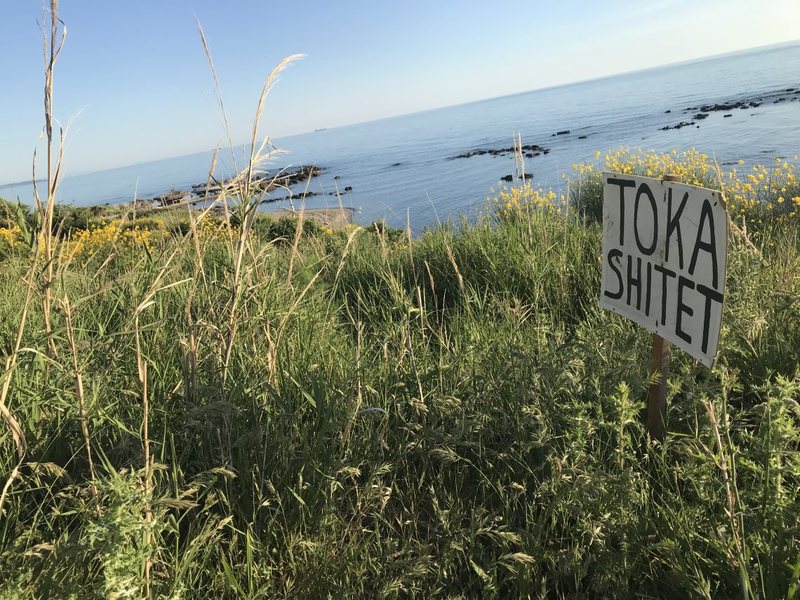
When the vehicle passes from Currilat towards Kallmi, just 3 kilometers from the city center of Durrës, everything changes noticeably.
The multi-storey buildings that have continued to rise since the pandemic period, on the former beach of Durrës, give way to the tranquility of Kallmi, whose coastline with gravel conglomerates makes it one of the most interesting areas of the Adriatic.
The clay hill, which runs parallel to the coast to Porto Romano for about four kilometers, has on the other side the "Aleksandër Goga" street, the longest in the coastal city.
The properties of old Durrës families in Kallm were recognized in the early 1990s, but their use has been almost negligible.
"After a long time, I had started to use a small beach on the family property, but apparently I should think more about what I will benefit from building the firms," says Flor Mara, a descendant of the family with the same surname, while adding that the state never issued a building permit in this area, even for those who dared to build something with a touristic character.
The coastline of the Bay of Durres has recorded rapid, often chaotic, development over the last two decades, while the demand for holiday apartments and space for the construction of hotels and tourist structures remains high.
The Kallmi area has escaped high-intensity construction due to the lack of infrastructure.
The narrow road leading to Kallm has been badly damaged this winter; groundwater has caused landslides on beaches in some places; olive trees planted in the 1960s have been halved, while the consequences of the wet season are visible everywhere.
The only news about this territory remains the interest of several large construction companies, which have begun contacting the family members to develop the properties.
Rezart Kthupi is another heir, in one of the properties located in Kallm, which is occasionally blocked by rainwater and groundwater.
Kthupi told BIRN that he has signed an agreement with one of the construction companies. According to him, the future of Kallmi depends on the number of families who will accept the construction offer.
Only in this case, according to him, should a detailed master plan for construction conditions be presented to the National Territorial Council.
"I believe that the numerous constructions in the adjacent Currilave area, as well as the services installed for the residents of this sector, have lured builders to Kallm," said Kthupi, adding that this beach is expected to be connected by a new road - through the hills, to the city.
"Of course, this process will take another 5-6 years, but for us residents it seems to be the only solution," Kthupi emphasized.
But what is expected to happen to the rocky coastline with gravel on the shore?
The possibility of establishing a tourist port is ruled out by specialists.
“It is completely impossible to build a port for yachts and boats,” engineer Tomorr Spahiu told BIRN. “The entire conglomerate coastline of this area makes it impossible for any type of vessel to anchor,” he added.
Spahiu also considers interference in the morphology of coastal waters dangerous, as according to him, the habitat, flora and fauna must be carefully preserved, while he also mentioned the case of sea urchins, which grow only in this area.
Otherwise, Kthupi sees the territory adjacent to the hill that falls almost perpendicular to the surface of the future housing as a good design opportunity.
The Kadiu, Rexha, Kthupi, Mara, Pepa families and at least ten others like them must make a decision about the future of the land they inherited from their ancestors.
“I have signed for my little family,” said Flor Mara. “Other successors will decide the same,” he concluded. /BIRN/
Happening now...











Denouncing Berishism is a prerequisite for denouncing the government
Nga Blendi Kajsiu
ideas



top



Alfa recipes


TRENDING 




services
- POLICE129
- STREET POLICE126
- AMBULANCE112
- FIREFIGHTER128